

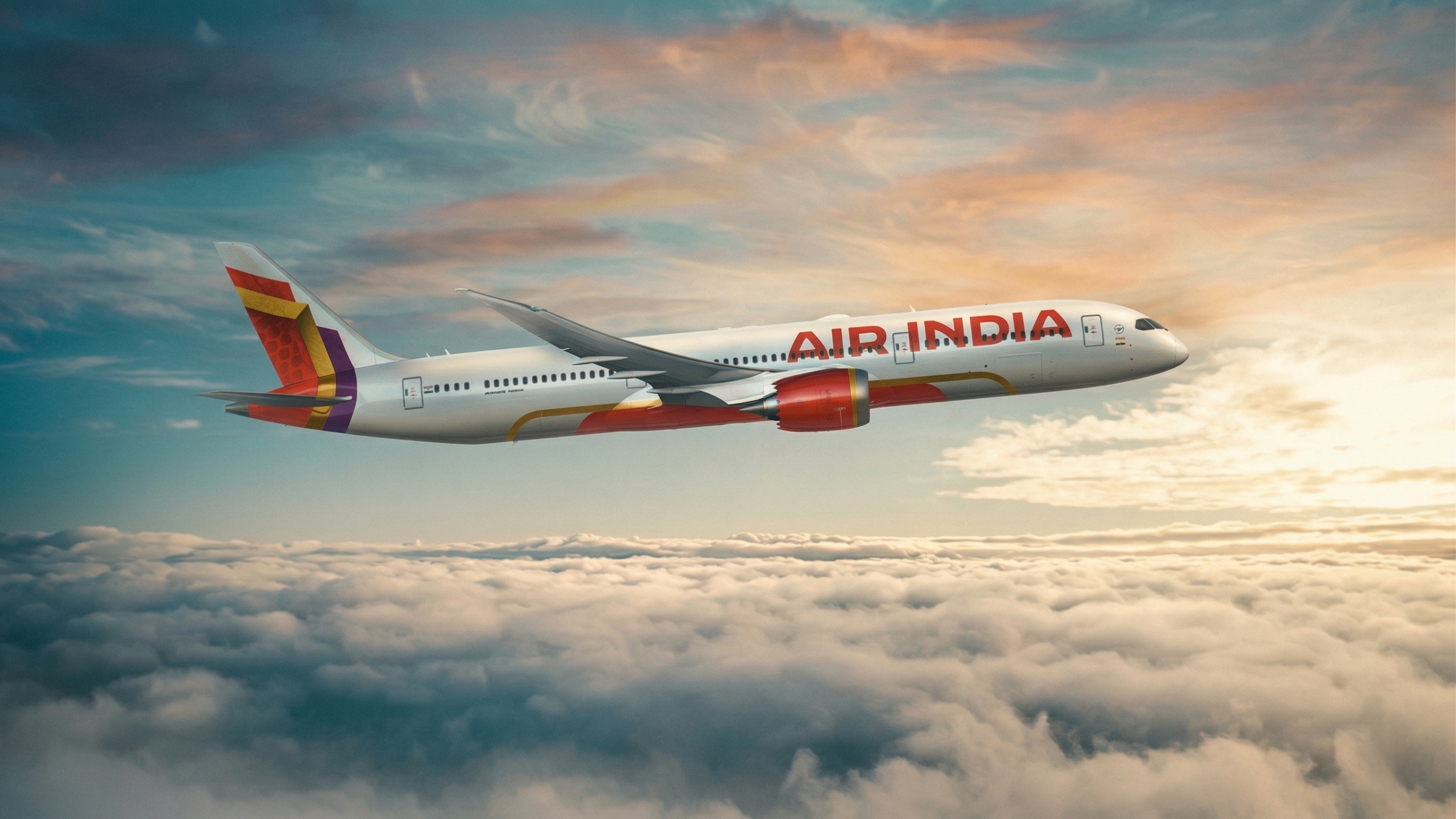

Air India’s “full scale reset” is more than a rebranding exercise.
It is a high stakes experiment in reclaiming relevance.
For a legacy brand, a new identity acts as a strategic signal. It tells the market that change is happening that the past is being re evaluated, and the future is being redefined.
But perception is not reset as easily as design.
And that is where the real challenge begins.
A Signal Is Not a Shift
A new identity can capture attention.
It can create curiosity.
It can generate conversation.
But attention is temporary.
Because changing how a brand looks is easy.
Changing how a brand is experienced is not.
Identity Attracts. Consistency Converts.
A new logo can buy you a few moments of curiosity.
A seamless, end to end experience is what builds long term loyalty.
In today’s landscape, audiences don’t just observe brands, they interact with them across multiple touchpoints.
Every interaction becomes a validation of the promise.
Or a contradiction of it.
The Legacy Trap
History is a double edged sword.
It builds trust.
But it also anchors perception.
Air India is not only competing with global airlines like Emirates or Singapore Airlines.
It is competing with the memory of its own past.
Past inefficiencies.
Past experiences.
Past expectations.
And in branding, memory does not fade with a new identity.
When Production Becomes Proof
In the digital era, brands are constantly visible.
Through films, interfaces, campaigns, and content every visual output shapes perception.
But visibility comes with responsibility.
A brand’s external expression must reflect its internal reality.
If the content feels premium, but the experience does not, the disconnect becomes obvious.
And once that gap is visible, trust begins to erode.
The RealityBox Perspective
Rebranding is often mistaken for transformation.
In reality, it is only the most visible layer of it.
A new identity is an invitation.
The experience is the validation.
For legacy brands, the challenge is not just to look different,
but to operate differently, consistently, and at scale.
Conclusion
Air India’s transformation is not just about a new look.
It is a test.
A test of whether a legacy brand can align perception with reality.
Because in the end, transformation is not defined by what a brand says it has become.
It is defined by what people experience it to be.






No Comments